


Let’s start with something that probably feels familiar
It’s Monday morning. You open your support dashboard and already know it’s going to be one of those days. There’s a backlog. A few agents are out. Wait times are creeping up again, and before you’ve even had your first proper coffee, the messages start coming in: Customer complaints. Internal escalations. Questions about rising costs. At some point, someone asks the question that sits underneath all of this:
“Why doesn’t this scale?”
The uncomfortable truth most teams eventually run into
Traditional call centers weren’t designed for how businesses operate today. They made sense when
- Support ran during fixed hours
- Demand was somewhat predictable
- Customers were okay waiting
None of that is true anymore. Today, customers expect the following:
- Immediate responses
- Help at any time of day
- Consistency across every interaction
And that’s where the cracks start to show.
The real problem isn’t volume. It’s the model.
Most teams assume they’re struggling because they have “too many calls.” But that’s usually not the core issue. The real issue is this: The only way traditional systems scale… is by adding more people, and that approach starts breaking down faster than most teams expect.
Where things start getting difficult
1. Growth automatically means hiring
More demand → more agents. Simple in theory. But in practice:
- Hiring takes time
- Training takes even longer
- People leave (often sooner than expected)
So you’re constantly catching up, not actually getting ahead, and during peak periods? You don’t scale; you scramble.
2. You’re paying even when nothing’s happening
Here’s something that doesn’t always show up clearly in reports: Call centers are staffed for peak demand. But most of the time… it’s not peak. So what happens?
- Agents sit idle
- Costs stay fixed
- Efficiency drops quietly
It’s an expensive way to stay “prepared.”
3. The experience starts slipping (even if the team is good)
You’ve probably seen this firsthand. Longer wait times. Calls getting transferred. Customers repeating the same issue again and again. This isn’t because teams don’t care. It’s because manual systems don’t handle pressure well, and once volume increases, small inefficiencies turn into visible problems.
4. Inconsistency becomes unavoidable
Even great teams struggle with this.
Different agents:
- Explain things differently
- Miss small details
- Interpret situations in their own way
Multiply that across thousands of conversations, and you get the following:
- Mixed experiences
- Occasional errors
- Frustrated customers
It’s not a people problem. It’s a system limitation.
5. Most of the work… doesn’t actually need people
If you step back and look at call data, a pattern shows up quickly. A large chunk of conversations are repetitive:
- Order status
- Account updates
- Basic troubleshooting
Important? Yes.
Complex? Not really.
And yet, highly trained agents spend most of their time here. That’s where a lot of inefficiency comes from.
6. Scaling takes too long
This is the part that really hurts during growth. If demand suddenly spikes: What do you do? Hire → train → onboard → adjust. That takes weeks. Sometimes months. But customer expectations haven’t changed. They still expect help… instantly.
The shift smarter teams are making (quietly)
The companies that are handling this well aren’t just hiring faster. They’re changing how they think about support altogether. Instead of asking, “How many people do we need?” They’re asking: “What should people actually be doing?” That shift leads to some very different decisions.
What’s working better now
1. Letting systems handle repetitive work
Instead of routing every call to a human: Routine queries are handled automatically. Things like:
- Status updates
- Basic FAQs
- Simple actions
Get resolved instantly. No queue. No delay.
2. Moving from “staffing” to “systems”
This is a subtle but important shift. Old thinking: “We need more agents.” New thinking: “We need a system that can handle more conversations.” Once you think this way, scaling becomes less about hiring and more about design.
3. Using a hybrid approach (this is where it clicks)
The most effective setups right now look like this:
- Systems handle high-volume, repetitive interactions
- Humans handle complex, sensitive, or high-value conversations
That balance does two things at once:
- Reduces cost pressure
- Improves overall experience
4. Planning for spikes, not averages
Instead of optimizing for a “normal day,” modern systems are built to handle:
- Sudden surges
- Peak traffic
- Unpredictable demand
Without needing to scale headcount every time something changes.
A simple way to think about it
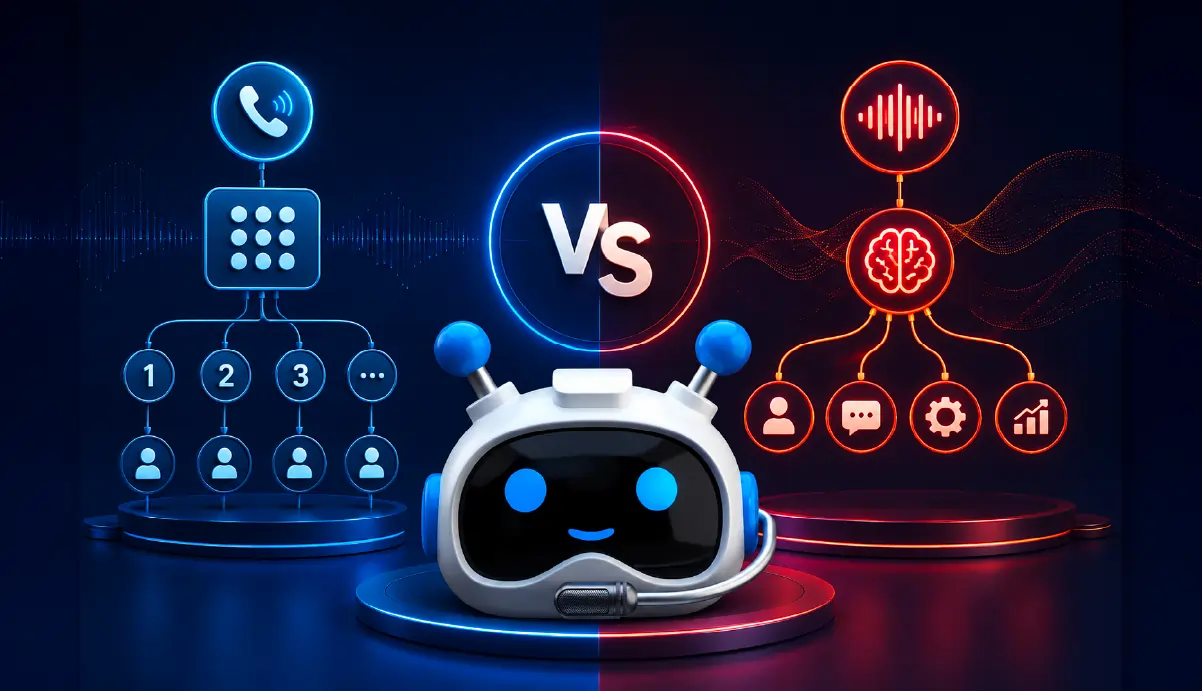
Traditional call center: Like a restaurant with limited tables. Once it’s full, people wait. Modern support system: More like a platform that expands with demand. More users don’t automatically mean more delays. That difference matters more than most teams realize.
So what’s actually broken?
To be clear, traditional call centers aren’t “bad.” They’re just built for a different kind of environment. One that
- Moved slower
- Had fewer channels
- Didn’t expect instant responses
Today’s environment is the opposite, and that’s why the old model starts struggling.
What decision-makers should really be asking
Instead of jumping straight to hiring, it’s worth stepping back and looking at:
- How much of our support work is repetitive?
- Where are we using people when we don’t need to?
- What happens if demand doubles next month?
- Are we scaling effort… or just adding cost?
Those questions usually lead to clearer answers than “let’s hire more.”
One last thought
If your growth plan looks like “We’ll just add more agents as we grow…”
That’s not really a scaling strategy. It’s a temporary fix. The teams that are getting ahead right now aren’t the ones with the biggest support teams. They’re the ones who’ve figured out how to handle more demand without increasing complexity every time they grow, and once that clicks, everything else cost, speed, experience starts improving with it.
See How VoXgent.AI Helps You Scale Without Adding Complexity.