

A Simple Guide for Decision Makers
Let me start with something simple. It’s late. Around 2 AM. Someone’s on your website. They’ve already picked what they want. They’re literally one step away from buying, and then they stop. Not because they changed their mind. Just because they have one or two questions.
“Will this arrive on time?”
“What if I need to return it?”
No one answers. So they leave.
Now imagine the same situation, but this time something shows up. A small message. Nothing fancy. “Hey, need help?” Or maybe even a quick option to talk instead of type. They ask. They get a response instantly. They go ahead and complete the purchase. That small moment right there that’s where conversational AI actually makes a difference. Not in theory. Just in everyday situations like this.
So what is conversational AI, really?
If you remove all the technical language, it’s pretty straightforward. It’s just a way for systems to talk to people. Either through voice… or text. That’s it. No menus. No rigid scripts. No “press 1 for this, press 2 for that.” Just a conversation that moves forward. Of course, behind the scenes there’s a lot going on: language models, machine learning, context tracking, but none of that really matters from a business point of view.
What matters is:
Can a customer ask something… and get a useful answer immediately? If yes, it’s doing its job.
Why this suddenly matters so much
A few years ago, people were okay waiting. They’d raise a ticket. Maybe wait a day. Now? Not really. If someone doesn’t get an answer quickly, they move on. Not dramatically. Just quietly, and this is where most businesses feel the pressure:
- Support teams are stretched
- Costs keep going up
- Customers expect faster responses than ever
So you end up in this loop where demand increases faster than your ability to respond. Conversational AI kind of sits right in the middle of that problem. It doesn’t solve everything. But it removes a lot of the waiting.
Voice vs Text What’s the actual difference?
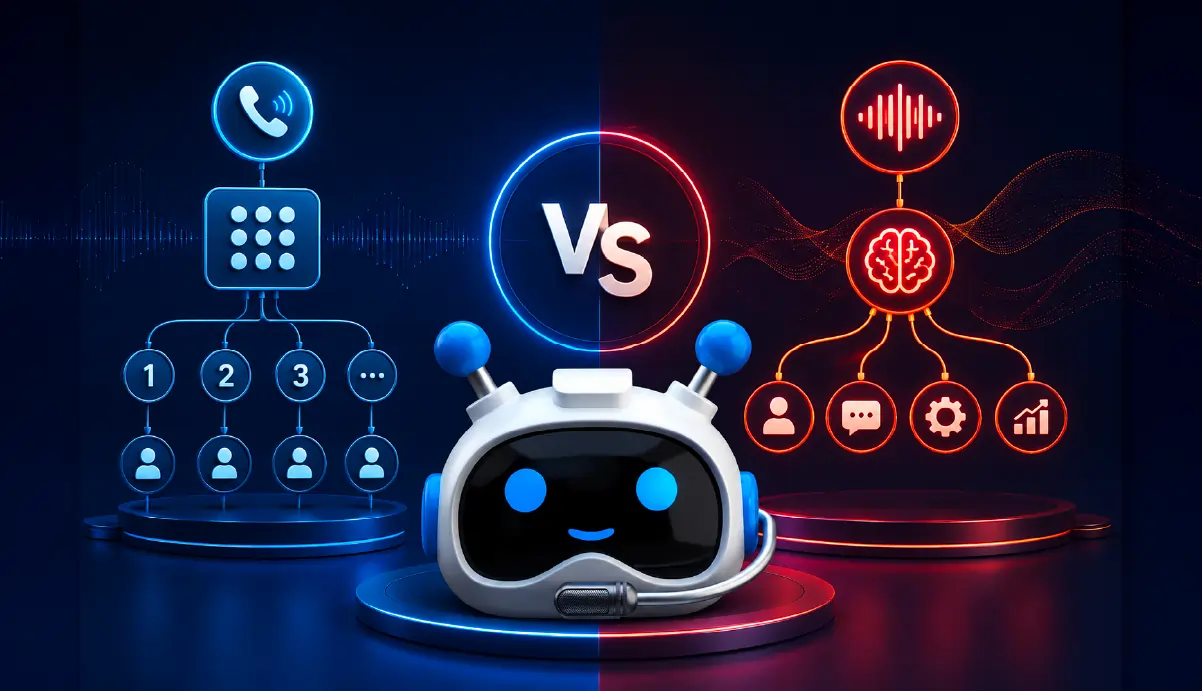
Most people treat this like a comparison. It’s not really that. It’s more about when someone prefers one over the other.
Voice (when people just want it done quickly)
This is what happens over calls. Someone speaks, and the system responds. No typing. No reading. It’s faster, especially when:
- Someone is in a hurry
- They’re multitasking
- Or they just don’t feel like typing
Think of simple things like “Where’s my order?” “Can you reschedule this?” These don’t need a long interaction. Just a quick answer. Voice works really well here.
Text (when people want to think a bit)
Chat is different. People slow down a bit more. They read. Compare. Go step by step. It works better when:
- The decision is slightly more involved
- There are multiple options
- Or they want something documented
Like:
“I want to change my plan but keep the same number.” That’s not a one-line answer. It needs a bit of guidance. That’s where text makes more sense.
So… which one should you pick?
Honestly, this is where a lot of teams overthink things. It’s not about picking one. People don’t behave the same way all the time. Sometimes they want to talk. Sometimes they’d rather type. It depends on what they’re doing in that moment. The teams that get this right don’t force a choice. They just make both available and let the customer decide.
Something most teams don’t realise
A lot of customers don’t leave because of price. They leave because they’re unsure about something, and no one’s there to answer. That’s it.
Quick example : An online store sees people dropping off at checkout. They assume it’s pricing. But when they actually look into it, the problem is simpler. People just had small questions. Nothing major. Just unanswered.
What changed : They added a basic chat option. Now, instead of leaving, customers ask, they get an answer, They move forward.
The outcome : More completed purchases. Not because the product changed. Not because pricing changed. Just because someone was available at the right moment.
Let’s be honest older bots were bad
Most people have had a bad experience with chatbots. You ask something simple. It gives you something completely unrelated. That’s why there’s still hesitation around this. But the newer systems are… different. Not perfect, but better.
They:
- Understand intent more accurately
- Don’t break the moment you phrase something differently
- Improve over time
Which makes them actually usable.
Where this is already being used
This isn’t experimental anymore. It’s already part of how a lot of businesses operate. You’ll see it in:
Banking: Checking balances, simple queries
Retail: Order tracking, product questions
Healthcare: Appointments, basic queries
Support teams: Handling repetitive questions all day
The pattern is always the same: Let the system handle what’s repetitive. Let people handle what actually needs thinking.
Should you be looking at this?
You don’t need a long checklist.
Just ask:
- Are customers waiting for responses?
- Is your team answering the same questions repeatedly?
- Are support costs starting to climb?
If yes, then this isn’t something to “explore later.” It’s already becoming part of how support works.One last thing This isn’t really about AI. It’s about being available. At the exact moment someone needs help. Because most of the time, the business that responds first… doesn’t just solve the problem. It keeps the customer.