

Introduction
There’s a particular kind of frustration that healthcare administrators know well: walking past an exam room that should be occupied, knowing a patient was scheduled, knowing nobody called to cancel, and knowing there’s no time left to fill the slot with someone else.
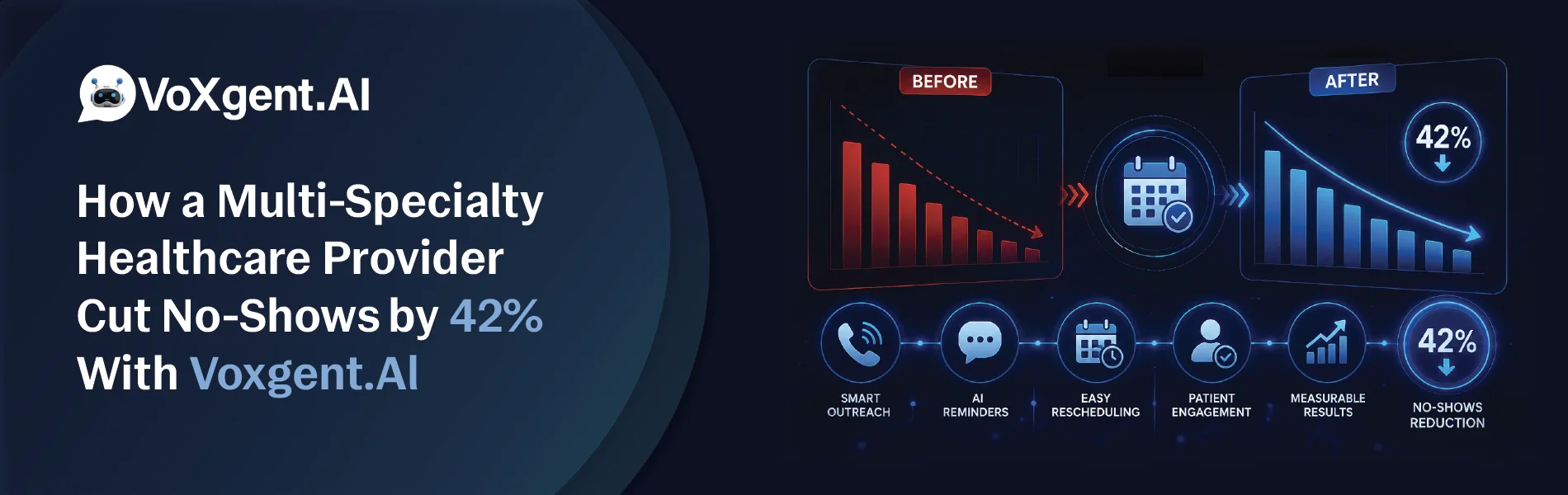
For one multispecialty healthcare provider running several departments, that experience wasn’t occasional, it was a daily drain on revenue and staff resources. After implementing Healthcare Appointment Automation through VoXgent.AI‘s agents, the organization reduced no-show rates by 42% within a single quarter. This case study covers what the problem actually looked like, what changed once automation was in place, and why the results went further than most people expect.
The Challenge: A Familiar Pattern
This provider manages multiple specialty departments, primary care, cardiology, dermatology, and physical therapy among them. Each department has its own scheduling rhythms and patient population. Despite a dedicated scheduling team, the front desk was constantly stretched: hundreds of daily calls, manual reminder calls that went out inconsistently or not at all, and a one-size-fits-all reminder script that was the same whether someone had a cardiology follow-up or a routine cleaning.
The no-show rate sat well above industry benchmarks, particularly in dermatology and physical therapy, specialties where appointments are often booked weeks out and easy to forget. Staff were spending hours each day making reminder calls that mostly hit voicemail, with no way to tell whether anyone had actually heard the message. Leadership recognized that without addressing the communication process systematically, the problem would compound as patient volume grew.
Why They Chose VoXgent.AI
The provider evaluated several options before deciding on VoXgent.AI. Three things separated it from the alternatives: the voice quality of the AI agents sounded natural enough that patients actually engaged with them, the reminder timing and messaging could be customized by department rather than sent as a single generic blast, and the platform integrated cleanly with their existing scheduling system.
For a multi-specialty organization, that last point mattered a great deal. A physical therapy patient and a cardiology patient are in very different situations. Sending them the same reminder with the same tone and timing isn’t just ineffective, it signals that the practice doesn’t really understand what they’re coming in for. The ability to tailor Healthcare Appointment Automation by department was the deciding factor.
The Implementation: A Phased Rollout
The provider chose to roll out VoXgent.AI in stages rather than switching everything over at once, which turned out to be an important decision for building staff confidence and measuring results cleanly.
Phase 1 — Reminder Calls and Texts
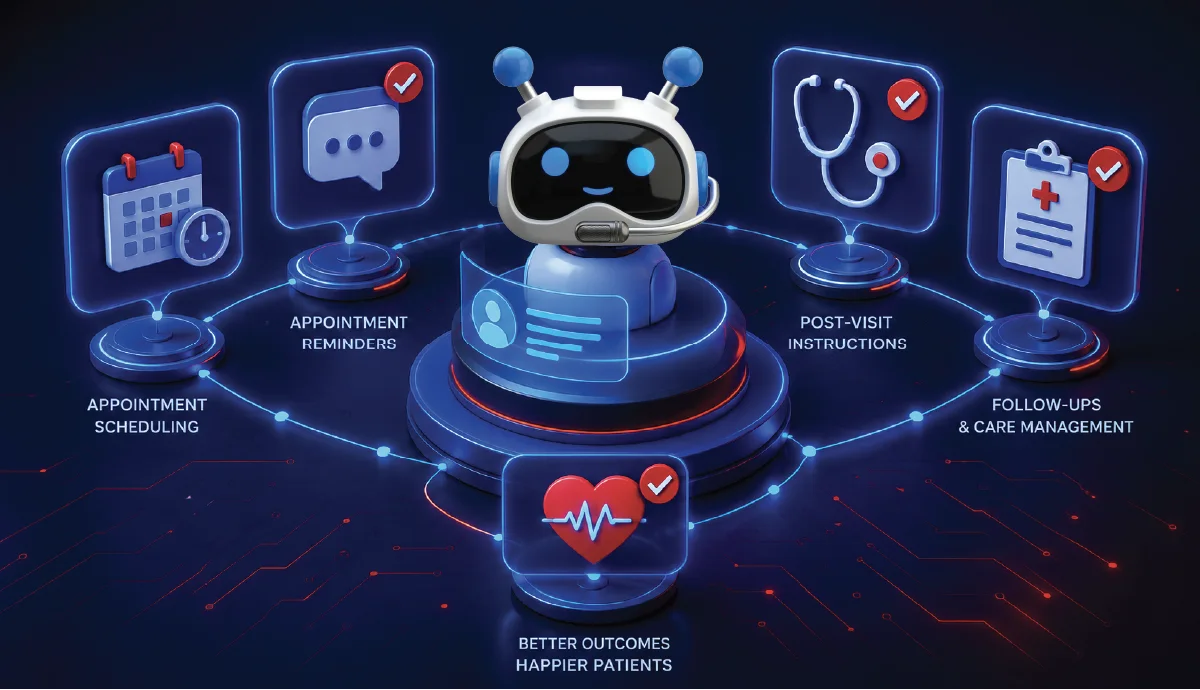
AI agents began handling appointment confirmations and reminders 48 hours and 24 hours before each visit, with messaging tailored to each department’s appointment type. This was the foundation of the Healthcare Appointment Automation strategy and produced the most immediate, visible impact.
Phase 2 — Two-Way Rescheduling
Patients who received a reminder could respond directly, by voice or by text, to reschedule on the spot, without needing to call back during business hours. This turned what used to be a missed appointment into a rebooked one, often within the same conversation.
Phase 3 — After-Hours Call Handling
VoXgent.AI agents began answering after-hours calls across all departments, capturing reschedule requests and new patient inquiries that previously went to voicemail and frequently weren’t returned in time to matter.
Phase 4 — Specialty-Specific Follow-Ups
For physical therapy and chronic care patients with recurring appointments, AI agents sent personalized check-ins between visits, reinforcing the importance of staying on schedule. This made the Healthcare Appointment Automation feel less like a generic notification system and more like something that understood the nature of ongoing care.
The Results: 42% Fewer No-Shows
Within the first full quarter after the rollout, the provider measured a 42% reduction in no-show rates across all participating departments. The steepest improvements came from dermatology and physical therapy, the exact departments that had struggled most before.
Beyond the headline number, the organization saw several connected changes that added up to something more significant:
- Recovered revenue: Fewer empty slots meant more completed visits without expanding appointment capacity.
- Reduced staff burden: Front-desk teams spent significantly less time making manual reminder calls, redirecting that time toward patients with complex needs.
- Faster rebooking: Two-way rescheduling meant cancelled slots were often filled the same day rather than sitting empty.
- Improved patient satisfaction: Patients specifically mentioned appreciating reminders that felt relevant to their appointment rather than generic.
The provider now treats Healthcare Appointment Automation as a core operational function, not a pilot project. That shift in how leadership thinks about it is itself a meaningful result.
What Actually Made the Difference
It’s worth being specific about why this worked, because not all automation produces outcomes like this. Three things stood out.
First, the VoXgent.AI agents sounded natural enough that patients engaged with them rather than dismissing them as robocalls. Second, the Healthcare Appointment Automation was customized by department, so a physical therapy patient received different messaging than a cardiology patient, reflecting the different stakes and follow-through involved in each. Third, the two-way conversation capability meant a reminder wasn’t a dead end. It was an opportunity to immediately resolve a scheduling conflict in the same interaction.
VoXgent.AI was built around all three of these principles from the start. That’s part of why the rollout moved from pilot to full deployment as quickly as it did.
What Other Multi-Specialty Providers Can Take From This
For healthcare organizations thinking about similar Healthcare Appointment Automation efforts, a few lessons emerge from this case:
- Start with the departments experiencing the highest no-show rates. Early wins build confidence internally and give you clear data to justify expansion.
- Customize messaging by appointment type rather than using one template for everything. Generic reminders often get ignored; relevant ones don’t.
- Prioritize two-way communication so reminders can resolve issues in real time rather than just provide notifications. VoXgent.AI builds this into every reminder flow, because a reminder that prompts a rebook is always more valuable than one that just confirms.
What Comes Next
Following this success, the provider is expanding its use of VoXgent.AI into post-visit follow-ups and proactive outreach for patients overdue on preventive screenings. Having proven that Healthcare Appointment Automation can move a core operational metric by 42%, leadership is now asking what else can be improved using the same approach, a natural question and one for VoXgent.AI is well positioned to support.
Closing Thought
A 42% reduction in no-shows isn’t just a number, it represents thousands of recovered appointment slots, measurably less strain on front-desk teams, and patients who stayed connected to their care instead of falling through the cracks. That result didn’t come from a generic scheduling tool. It came from Healthcare Appointment Automation designed to fit how a multispecialty organization actually works, by department, by appointment type, by patient. That adaptability, combined with natural-sounding AI and real integration with existing systems, is exactly what VoXgent.AI was built to deliver.