


Let’s call it what it is
If your support team feels slower than usual… a bit disengaged… or just constantly tired…
that’s not random, and it’s usually not because people “don’t care enough.” Most of the time, it’s the system they’re working inside. The tricky part? You don’t notice it immediately. It builds slowly:
- Replies take longer
- Queues grow quietly
- SLAs start slipping
Then customers feel it. Then your team feels it more, and eventually, people start leaving.
Burnout doesn’t happen overnight
It’s not one bad day. It’s repetition. If you look closely at what your support team handles every day, a pattern becomes obvious.
It’s the same questions, all day
There are only so many times someone can answer:
- “Where is my order?”
- “Can I reschedule?”
- “What’s the update?”
Before it starts to feel draining. Not difficult. Just… constant.
The pace never slows down
There’s always another ticket. Another call. Another message. Support isn’t just about solving problems. It’s about solving them quickly, all the time, and there’s rarely a pause between conversations.
Some conversations carry weight
Not every customer is neutral. Some are frustrated. Some are angry. Some just need reassurance. Your team absorbs that energy repeatedly, and that pressure adds up.
Your best people are stuck doing repetitive work
This is where burnout accelerates. The people you hired for judgment and empathy are often:
- Copy-pasting replies
- Answering predictable questions
- Following the same workflows again and again
That’s not where they add the most value. But it’s where most of their time goes.
What burnout actually costs you
This isn’t just a “people problem.” It affects everything:
- People leave → you hire and train again
- Response times slip → customers get frustrated
- Quality drops → trust takes a hit
- Morale dips → productivity follows
And support starts feeling like a cycle that’s hard to break.
So where does AI actually help?
Not by replacing your team. That’s usually the wrong approach. The real value is simpler: Take away the kind of work that’s causing the burnout in the first plan, and this is where something like VoXgent.AI starts to make a noticeable difference.
How VoXgent.AI fits into this in a practical way
Instead of changing how your team works, VoXgent.AI changes what they have to deal with. It starts with the most obvious pressure point: volume. When a customer calls, there’s no queue. The call gets answered immediately, and for a large portion of those conversations, the repetitive ones, the system handles them end-to-end.
Things like:
- Order status
- Appointment changes
- Basic account queries
These don’t need human judgment. They just need fast, clear answers. So instead of your team handling these 50 times a day, they’re handled instantly.
It doesn’t feel like a typical “system.”
One concern teams usually have is this: “Will this feel robotic?” That used to be a valid concern. But modern voice systems are built to handle conversations more naturally. Customers don’t have to press numbers. They just explain what they need, and the system responds. That alone removes a surprising amount of friction.
When something actually needs a human
Not everything should be automated, and it isn’t. When a situation is complex, sensitive, or unclear, the conversation moves to a human. But here’s the important part: It doesn’t start from zero. The context is already there. Your team steps in without the customer repeating everything again. That small detail makes a big difference in how both sides experience the conversation.
The 24/7 effect (without the usual cost)
Late-night queries. Weekend spikes. Campaign surges. Normally, that means:
- Hiring more people
- Adding shifts
- Or accepting delays
With something like VoXgent.AI, that pressure disappears. The system just… continues. No scheduling complexity. No backlog buildup.
What actually changes for your team
This is the part most leaders notice first. Not cost savings. But how the day feels.
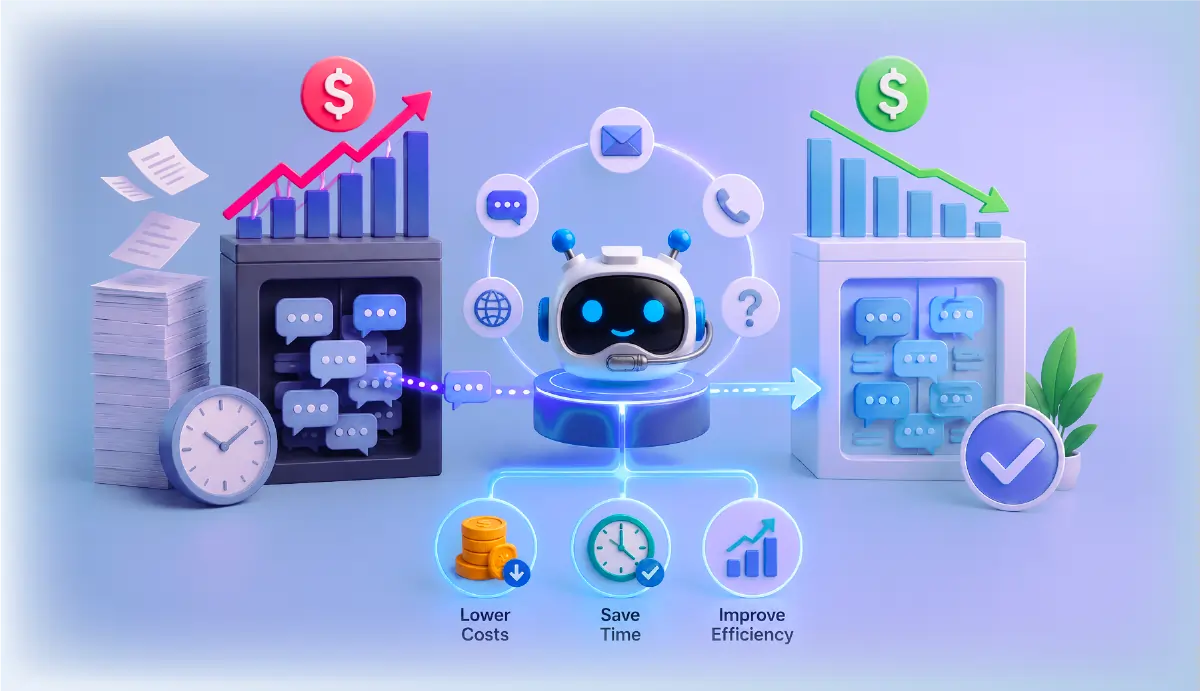
Before:
- Constant interruptions
- Endless repetition
- Always catching up
After:
- Fewer, more meaningful conversations
- More focus
- Less urgency in every interaction
The team sounds calmer. Work feels more manageable.
Why this reduces burnout (in a real way)
Burnout isn’t just about volume. It’s about doing work that feels repetitive, rushed, and never-ending. Once you remove:
- Repetitive queries
- First-level filtering
- Constant call pressure
What’s left is work that actually needs human thinking, and that’s far more sustainable.
What your team should be doing instead
Instead of:
- Repeating answers
- Managing queues
- Rushing through tickets
They can focus on:
- Solving real problems
- Handling complex situations
- Building customer relationships
- Spotting retention or upsell opportunities
That’s a very different role.
What this means for leadership
If your instinct is to hire more people when support demand grows… That makes sense. But it usually just delays the problem. Because the issue isn’t only capacity. It’s how that capacity is being used.
The real takeaway
Customer support burnout isn’t a people problem. It’s a system problem. Fix the system and everything downstream improves:
- Faster responses
- Better conversations
- Stronger teams
If you’re trying to fix this, keep it simple
You don’t need a big transformation. Start small. Pick one workflow that:
- Happens frequently
- Follows a pattern
- Doesn’t need deep judgment
Automate that. See what changes. Then build from there. That’s how most teams make this work.